
Diagnostics ready for the workforce
Diagnostic testing for employers and occupational health providers
Better occupational health, made possible
Differentiate employee benefit packages
Increase resilience and wellbeing
Reduce absences
Aggregated data insights
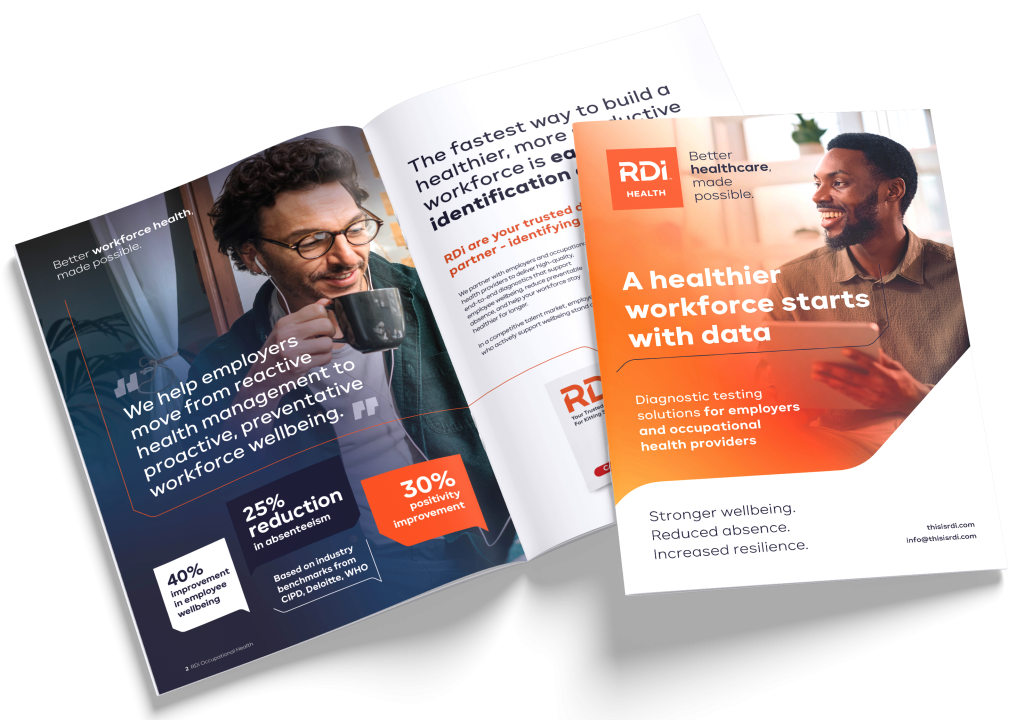
Download our occupational health brochure
- Easy self-sampling
- Clear, private results
- Healthier workforce
Trusted diagnostic testing for today’s workforce
Occupational health programmes can be the key to supporting employe wellbeing, meeting health and safety obligations and reducing avoidable absences.
For many industries, workforce testing is a regulatory requirement including manufacturing, construction, transport and healthcare. For others, it’s a voluntary perk to give employees access to trusted health insights without workplace monitoring.
With the right diagnostic kits, compliant, accurate self-sampling testing can be accurate, discreet and convenient.
A healthierworkforcestarts withdata
Sharing the right information, in the right way
Depending on the type of test, results may remain completely private to the individual, showing to the employer only as a statistic around drop-offs or uptake. Where role‑specific or safety‑critical testing is required, only the information necessary for compliance is shared, in line with occupational health standards and data protection requirements.
Our complete diagnostic solution
A better diagnostic pathway for your customers
Easy. Trusted. Compliant. Scalable.
Choose off-the-shelf, or tailor a workforce-specific solution
Employee receives kit at home or workplace
Sample collected
Laboratory processes results
Employee receives results privately
Aggregated insights returned to employer / OH provider

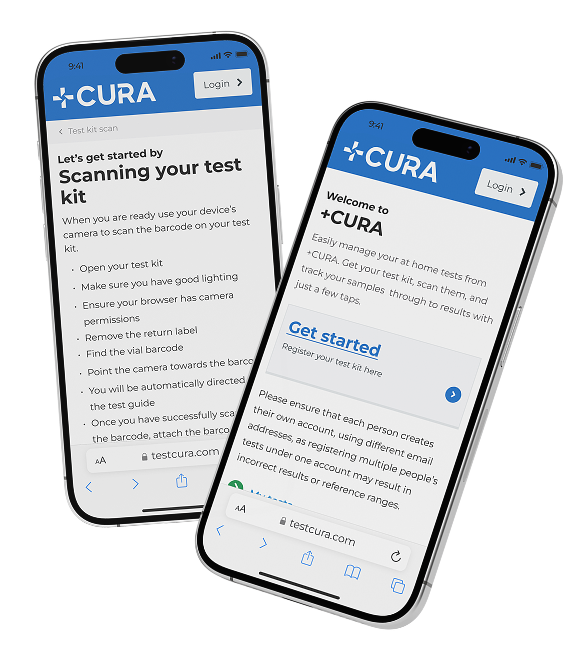
Digitally enabled withour +CURA app
The digital wrapper for workforce diagnostics
+CURA is our cloud-based LIMS and patient-facing digital app, designed to bring all workforce diagnostic journeys together in real-time.
Frequently asked questions
Is occupational health testing mandatory in the UK?
Occupational health testing is mandatory in some industries, such as construction, manufacturing, transport and healthcare, where health and safety regulations apply. In other sectors, testing is optional and employer led.
Does occupational health testing monitor employees?
No. Occupational health testing is not a form of employee monitoring. RDi’s approach is designed to support wellbeing and compliance, without tracking individuals or monitoring personal health data.
When are occupational health results shared with employers?
Results are only shared where necessary for role‑specific, safety‑critical or regulatory compliance. Even then, only the minimum required information is provided, in line with occupational health standards and UK data protection laws.
How is employee privacy protected in occupational health programmes?
Employee privacy is protected through strict data governance, clinical oversight and GDPR compliant systems. Visibility of information is determined by the type and purpose of the test.
How do employees complete occupational health testing?
Many occupational health programmes use compliant self sampling diagnostic kits, allowing employees to complete testing at a time and place that suits them.
Is occupational health testing a benefit or a compliance tool?
It can be both. Some testing is required by regulation, while other programmes are offered as a wellbeing benefit to support employee health, engagement and retention.
Why should self-sampling diagnostics be part of my occupational health offering?
Self sampling diagnostics make occupational health programmes easier to scale, more accessible for employees, and less disruptive to working patterns. They allow compliant testing to take place at a time and location that suits the individual, supporting wellbeing and participation without workplace monitoring.
What insights do I gain into workforce health?
Employers gain access to anonymised, high‑level insights such as participation, uptake and completion trends. Dashboards are designed to support occupational health planning and engagement, without visibility of individual results or personal health data.
